



Beedster
-
Posts
14,934 -
Joined
-
Last visited
-
Days Won
62
5 Followers


.thumb.jpg.b8ec35a3277e582fdd0bc590c233706a.jpg)
Beedster's Achievements



-
And now back in ‘the system’ to protect the guilty under the ‘innocent error’ defence.
-
Although it might be there's a process that as an auctioneer has to be followed I guess?
-
Probably depends on who the person/company you got it from actually is, if it's Parcelforce then perhaps justified as he could argue it was sent to him in error by them and that the owner needs to resolve this with them who he'd paid to deliver it? But why would you not return calls or talk to Police. At present it all smells a bit wrong doesn't it........
-
This is all quite bizarre, sounds to me like the auction house and the 'consignee' might have something of a special relationship.......?
-

Anyone know a Luthier who refrets Graphite Necks?
Beedster replied to HeadlessBassist's topic in General Discussion
I'd assumed that it's a neck-thru bass but in case not - and the Status website suggests it's not also - surely the best bet is a new neck, won't cost a whole not more than a refret and far lower risk? -
LOL, if it wasn't for @agedhorse and @Bill Fitzmaurice I'd probably only ever visit the basses for sale forums
-
I plug in my 600w Mesa head and 1516 cab at home, at rehearsals, and on stage. If I want more volume I turn it up, if I want less I turn it down. Occasionally I feel it would be easier to have a smaller and lighter rig for smaller gigs, but I get over it once I hear it
-
A week of rehearsals for a big arena show... WoT's gig diary!
Beedster replied to wateroftyne's topic in General Discussion
As if Trump and Brexit weren't enough change to be going on with...... -
Anyone know a Luthier who refrets Graphite Necks?
Beedster replied to HeadlessBassist's topic in General Discussion
This ^ I can't speak for the effects of fretting a formerly fretless neck, but I've had basses that sang with a fretless neck and were comparatively lifeless when a fretted neck was installed (I like to chop and change necks). OK, the fact that it's both the original neck and that it's graphite reduces the risk somewhat, but I can't help feeling that Tony's advice is good advice 👍 -
FS: ‘51 Precision bitsa (with very high quality bits)
Beedster replied to Beedster's topic in Basses For Sale
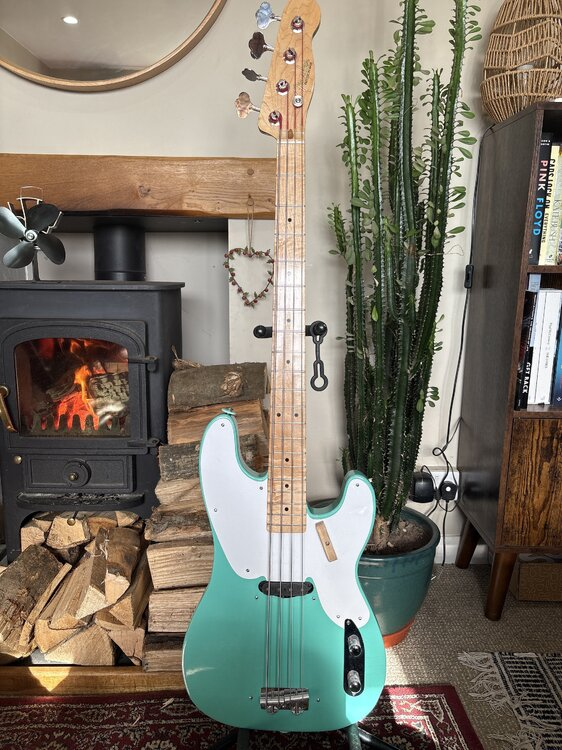 I have a box as well as a hard case that will protect it during transit (although won't be much use for anything else), so can courier this 👍
 -
FS: ‘51 Precision bitsa (with very high quality bits)
Beedster replied to Beedster's topic in Basses For Sale
Nice room 👍 -
Welcome Chris, great that you’ve joined us, many many many Trace and Status fans here, suspect you’re gonna be kept busy 👍
-
A week of rehearsals for a big arena show... WoT's gig diary!
Beedster replied to wateroftyne's topic in General Discussion
You do some lovely interesting gigs Michael 👍 -
Which has solved problems with two of my amps over the years 👍
-
Blondie basslines are like ABBA basslines, sound simple until you try to play them 👍


