-
Posts
1,958 -
Joined
-
Last visited
-
Days Won
1
Content Type
Profiles
Forums
Events
Shop
Articles
Everything posted by Sparky Mark
-
Odyssey B300 bass - rare Attila Balogh bass from the 1970s
Sparky Mark replied to emoryi's topic in Basses For Sale
-
2018 Fender USA Limited Edition Parallel Universe '51 Telecaster PJ Bass in excellent/new condition with all original paperwork, tools and case. Weight: 4.3kg / 9.48lbs. This is a lovely passive PJ bass with an amazing tone, described by Fender as "punchy, growling, seismic and like nothing you've heard before." I agreed when I tried it, hence why I purchased it from new. However, my recent retirement now dictates that my bass collection be trimmed to fund my other addictions. As a Limited Edition it is relatively rare, with a unique set of features which also appealed to me. The translucent nitrocellulose lacquer blonde finish allows the ash grain to show through beautifully IMO. Also included is the framed Fender promotional Parallel Universe '51 Telecaster PJ Bass artwork to adorn your studio/man cave wall. Happy to provide more information or photos on here or via Personal Messenger, just ask. Price is £1500 collected from Bury Saint Edmunds or localish meet up. No trades please, just a straight sale, thank you for looking. Link to Fender video:- Specifications:- Body: Solid Ash. Body Finish: Blackguard Blonde Gloss Nitrocellulose Lacquer. Neck: Maple with maple fingerboard. Neck Finish: Gloss Nitrocellulose Lacquer Front, Satin Nitrocellulose Lacquer Back. Scale Length: 34 inches (864 mm). Fingerboard Radius: 9.5 inches (241 mm). Nut Width: 1.625 inches (41.3 mm). Controls: Dual Concentric Volumes, Master Tone. Custom Shop '60s P Bass split-coil middle pickup, Custom Shop '60s Jazz Bass single-coil bridge pickup. Stacked volume knob, where the top knob adjusts the volume of the Precision Bass pickup and the bottom adjusts the Jazz Bass pickup. Master tone control. Bridge: 4-Saddle Hi Mass Vintage-Style Bass with vintage-style nickel-plated brass saddles. Tuning Machines: Fender® Lightweight Vintage-Style Keys with Tapered Shafts. Fender blurb:- The authentic style extends from the slab body, distinctive single-ply black pickguard to the dual-concentric volume knobs and vintage spaghetti logo on the Telecaster-style headstock — original-era touches brought into the present. What's more, the neck recalls the time of James Jamerson, as it's based on a '63 P Bass profile ideal for funky, thumb-over playing, and the 9.5"-radius fingerboard makes for fast, low action. In all, the '51 Telecaster PJ Bass has the look of the bass that started it all, but several contemporary trappings. The result is a bass that is punchy, growling, seismic and like nothing you've heard or seen before.
- 1 reply
-
- 7
-
-
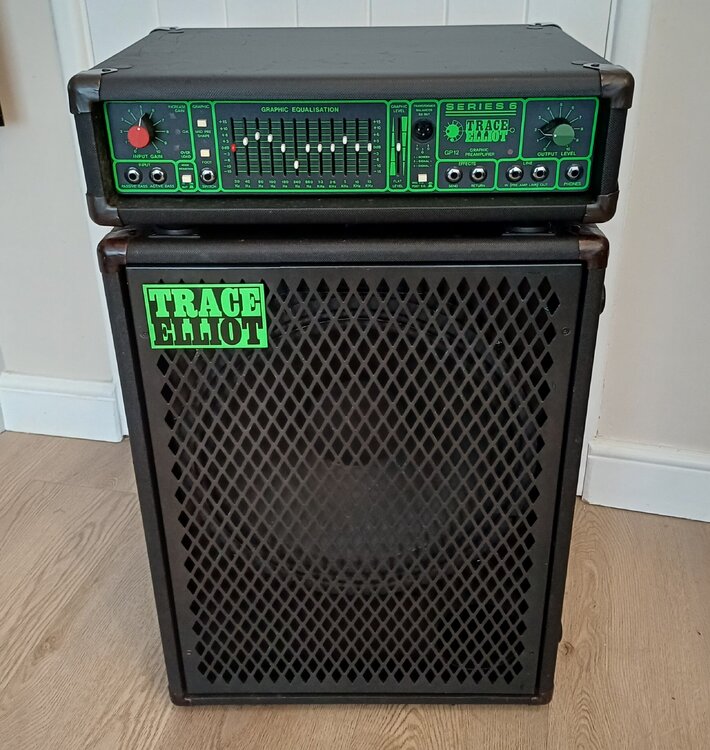
£25 off!! Trace Elliot Series 6 Compact stack.
Sparky Mark replied to Sparky Mark's topic in Amps and Cabs For Sale
-
2012 SPECTOR® Coda Deluxe 4 USA MODEL MADE IN THE WOODSTOCK, NY WORKSHOP. Here is a stunning example of Stuart Spector's work, this CODA is adorned with a superb piece of high grade buckeye burl and has a Pau Ferro fingerboard fitted with quality abalone Spector crown inlays. NECK CONSTRUCTION: 1-Piece Rock Maple, SPECTOR® 1962 Neck Shape™ FINGERBOARD: Pau Ferro NECK INLAYS: Abalone Spector inlays NUMBER OF FRETS: 20 SCALE LENGTH: 34" RADIUS: 7.25" WIDTH AT NUT: 1.5" STRING SPACING AT BRIDGE: 0.75" Hardware BRIDGE HEX KEY SIZE: 2mm TRUSS HEX KEY SIZE: 5mm COLOR: Chrome BRIDGE: Hipshot A style TUNERS: Schaller® STRAP BUTTONS: Dunlop® Dual Design™ Electronics TONE CIRCUIT: Aguilar® OBP-2™ with passive tone and active/passive switching CIRCUIT TYPE: 9-Volt Active BRIDGE PICKUP: Aguilar® J™ NECK PICKUP: Aguilar® J™ PICKUP TYPE: Passive - Single Coil, This bass is Active or Passive via Push-Pull Pot Body SPECTOR® Original Coda™ Body Shape BODY CONSTRUCTION: Lightweight Alder PICK GUARD: None Top: Buckeye Burl top - £400 option FINISH OPTIONS: High Gloss Weight: 4.125kg/9lb 1.8oz Condition is excellent/unmarked other than a single ding on the body top inside edge; shown circled in one photo. Comes with a Spector Hardcase with key (made in Canada by TKL), a Spector Deluxe padded gig bag, a premium quality leather Right On Spector branded strap fitted with a pair of Dunlop strap locks and the truss rod and bridge allen keys. Price is £3,000 by cash/bank transfer collected or localish meet up nearish to Bury Saint Edmunds. No trades please, just a straight sale, thank you for looking. More info and review below the photos. Please PM me for more info/photos. ABOUT THE CODA 4™ It is no joke that Stuart Spector is always thinking about new ways to bring new avenues to improve player experience and offer new soundscapes for musicians to explore. The Coda™ Bass is the perfect example of how Stuart looks to take classic ideas and put a decidedly SPECTOR® twist on them. Part homage to the great bass sounds and styles of the past and yet new and refreshing because of the attention to detail and hand-crafted construction, the Coda™ is nothing short of a new SPECTOR® Classic. "But why do something that's been done before?" Do not let the familiar and more traditional styling deceive you. This bass is a thoroughbred SPECTOR® through and through. All of the things that make our NS-Bass™ models so popular are present in the Coda™. It's these little details and the fact that these basses are hand-made by Stuart Spector and his master craftsmen in our Woodstock Workshop that sets the Coda™ apart from the rest. SPECTOR® players are always first to point out how the necks of their guitars and basses are notably better than any instrument they've ever played. We invite you to try a Coda™ and see if you don't agree with us. "We feel we've created something new and special honouring those classic designs of years past. " ~ Stuart Spector Spector Coda Review 2011 Stuart Spector is a legend in the bass world. His instruments have provided the backbone to bands like Metallica and Living Colour, and have often been imitated. Spector’s Coda series is made by hand by the man himself and his small team in the USA, and unlike his more sleek models like the NS, which still looks futuristic over 30 years after its debut, the Coda pays tribute to an altogether more vintage aesthetic. THE LOWDOWN I reviewed both the Coda 4 (four string) and Coda 5 (five string) basses. Each features: a one-piece rock-maple neck with a 20-fret Pau Ferro (Bolivian rose¬wood) fretboard carved into Spector’s 1962 neck shape; a lightweight alder body; Aguilar OBP-2 active tone circuits; passive Aguilar J single coils; Schaller tuners; Dunlop Dual Design strap pins; and 34-inch scale lengths. The fret radius on each instrument is a curvy and comfortable 7.25 inches. Lined or unlined fretless fretboards are available at no additional charge. The Coda is available in four colours: creme, solid black, candy tangerine and metallic blue. I reviewed the Coda 4 in Candy Tangerine and the Coda 5 in solid black. The workmanship of both basses was absolutely flawless. The crucial neck joint area is unbelievably tight, ensuring unfettered energy transfer between the wood grains of the neck and body. The finish is perfectly applied – something you really appreciate on a jet-black instrument like the Coda 5 on review – and the fretwork is incredible. Bass players often aren’t as picky about the condition of their frets as guitarists, since there’s less bending involved, so I’ve played some basses with pretty woeful frets. The Codas leave them all in the dust. The sheer smoothness of the fret ends encouraged me to get more adventurous in my arrangements, throwing in more slides and grace notes than I would otherwise attempt, simply because the instruments felt so damn agreeable to such techniques. FACE THE BASS The Coda’s tones are very punchy, powerful, dynamic and balanced. The low end is deep and tight, the treble is present and raspy (in a good way) and the midrange is very musical, placed smack bang in the middle of the midrange spectrum rather than being an overly boomy low-mid or overly honky upper-mid voice. The bass’ unplugged tone is noticeably piano-like in tone, attack and sustain, and I quite happily spent about an hour and a half playing the Coda 5 unplugged before it dawned upon me that I should plug it in and hear what it could do through an amp. The Coda’s “plugged in” tone is similar to it’s unplugged voice: balanced, sustaining and with great dynamics. Because the pickups are passive and only the pre¬amp is active, you can switch the preamp off and use the bass with a more vintage tone, which is great for straight-ahead rock and old-school soul and R&B. The ability to boost the treble and bass via the active pre-amp maintains the balanced tone and sustain characteristics while building upon them for a percussive, snappy slap-and-pop tone, and dipping out the treble and keeping the bass up high creates a killer dub voice. I also liked using the bass pot to reduce the low frequency a little, to allow the instrument to sit more neatly within a recording that featured double-tracked seven-string electric guitars. IN A CLASS OF THEIR OWN The Codas are world-class basses that are built with a discriminating touch to create, dare I say it, champagne tones. The workmanship really is second to none, and the only reason I’m not immediately wiring money to the distributor so I can keep the basses instead of returning them after the review is because my bank manager would kill me. By Peter Hodgson Price: RRP $4199.99 (Coda 4); $4399.99 (Coda 5)
-
Sounds like Andertons may be employing the assistants too disinterested and rude to work in Denmark Street. (That used to be a pretty high bar).
-
-
That's not a whole lot of use if you've arranged the day off work to receive the delivery though is it? Luckily, having retired, I'm free to hang around the house endlessly in anticipation.
-
Warning; contains some rude words:- https://www.facebook.com/share/r/17jcisw6mb/
-
Did you receive any sort of refund from Andertons; I'm assuming the next day delivery cost you more?
-
Trace Elliot - Rescue & Restore (and bargain finds)
Sparky Mark replied to SimonK's topic in Amps and Cabs
What a fantastic place to live with a music culture second to none, I'm jealous! Personally, I'd still keep the pedal; you'll probably make new contacts in Ireland with the skills to diagnose/fix it, and it could still prove an asset at home. -
Trace Elliot - Rescue & Restore (and bargain finds)
Sparky Mark replied to SimonK's topic in Amps and Cabs
A slightly more sensible option might be to just take one of the cabs to the gig, depending on which you prefer the sound of on its own? When and where are you emigrating to, and are you taking this rig? Keeping the pedal with the head could be a nice touch for a future owner to fix. -
Trace Elliot - Rescue & Restore (and bargain finds)
Sparky Mark replied to SimonK's topic in Amps and Cabs
Good idea. -
Trace Elliot - Rescue & Restore (and bargain finds)
Sparky Mark replied to SimonK's topic in Amps and Cabs
I reckon you'll need to pull them off. They may be very hard to pull off after all the years. -
Yep, saw that and thought of this thread.
-
No problem; sometimes you just have to provoke a response. LOL. Yes, it's a Patrick Eggle New York bass. Took me a few years to find it on Ebay after a local bass player sold it on Reverb.
-
Artist series are just based upon specific models in Hofner' history. Google AI is your friend.
-
-
Trace Elliot - Rescue & Restore (and bargain finds)
Sparky Mark replied to SimonK's topic in Amps and Cabs
Cheers. Hopefully you won’t need to do too much disassembly to get to the underside of the PCB. Old solder joints and connectors can be rather fragile and crack when disturbed, causing more issues. Desoldering large caps can also be a bit of a PITA, due to needing a fair amount of energy from the soldering iron to melt the solder sufficiently to remove without lifting the PCB track/pad. You are very lucky to have a friend with the knowledge to help fix your amp. -
Trace Elliot - Rescue & Restore (and bargain finds)
Sparky Mark replied to SimonK's topic in Amps and Cabs
That's good information; no disrespect intended towards your friend. I recently replaced some swollen but still working capacitors in a 1980s NAD amplifier because I could see they were damaged. The good news is that new capacitor technology has moved on and you should be able to find replacements in smaller packages. -
Trace Elliot - Rescue & Restore (and bargain finds)
Sparky Mark replied to SimonK's topic in Amps and Cabs
That's good news re the front panel illumination; I guess it's possible a previous owner preferred the panel unlit? Is 100Hz hum a known symptom of failing PSU capacitors? Before doing any desoldering or replacement of parts, I'd recommend you get a knowledgeable amp tech to take a look. Of course, it may be impossible to get that head to be completely silent or hum free simply because of noise on your mains supply or other radio frequency interference. On a gig, additional noise is very often present for various reasons, but isn't a real problem because of other background noise. -
Trace Elliot - Rescue & Restore (and bargain finds)
Sparky Mark replied to SimonK's topic in Amps and Cabs
Is the pedal definitely the correct one for the head? (there may be different versions for different generations of head). I would expect that once the pedal is connected that it takes precedence, and probably best not to use the head's switches. Are all of the switches on both the head and pedal momentary or latching? (The type of each switch on the pedal should be the same as the one on the head). If all the lights on the head are on, what happens when you insert the pedal connector? (Do all hot switching tests with master volume at zero). If certain pedal switches don't work every time they are pressed, it could be they need their contacts cleaning. It could also be worth cleaning the pins and female pin sockets on the head. Although there are many switch cleaning products available, I'd recommend Deoxit D5. -
I expect the Chinese Hofner (Contemporary and Ignition) violin basses outsell the German built ones many, many times over, which couldn't have helped. As an example, out of curiosity I bought a couple of the cheapest Hofner Ignition violins to decide a) whether I liked violins at all, and b) which pickup positions I preferred. I chose the Ignition basses because their construction is a little closer to the hollow body originals, not having the full maple centre block of the Contemporaries. I then very briefly owned a genuine German violin bass, but to be honest, the Ignitions got pretty darn close sound, feel and weight-wise so the German went back and I still have the Ignition. It may get gigged when I need a featherweight shortscale in my old(er) age. It's a shame when anything "iconic" disappears, but such is commerce.